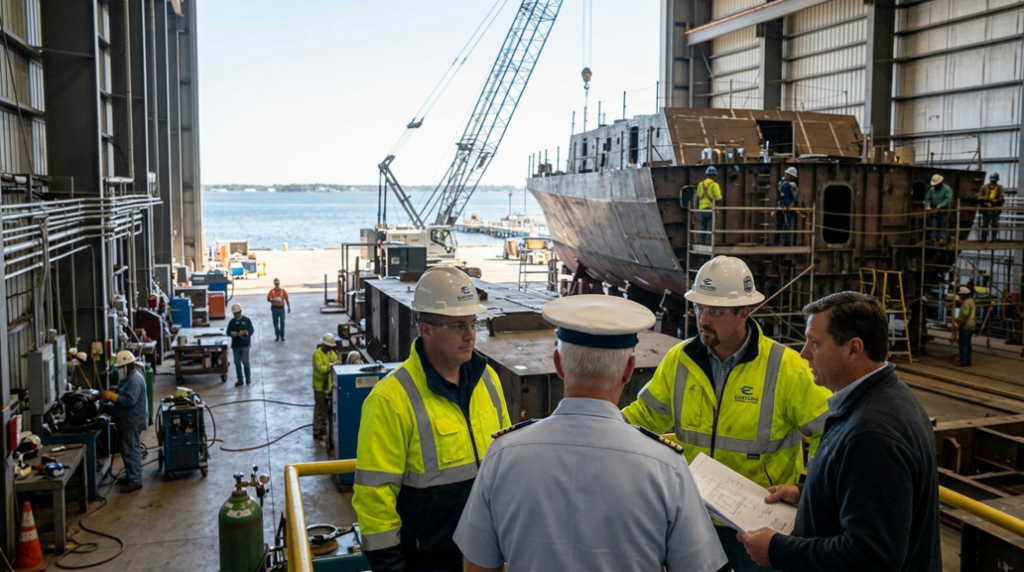
The U.S. Coast Guard and Eastern Shipbuilding are currently engaged in negotiations to resolve issues surrounding the Offshore Patrol Cutter (OPC) program. This program has faced significant challenges, particularly after work on the first two cutters, designated Argus (WMSM-915) and Chase (WMSM-916), was halted in November 2025. The discussions are critical as they aim to conclude the contract related to these initial vessels, marking a pivotal moment for both the shipyard and the Coast Guard.
Eastern Shipbuilding, based in Florida, initially received the contract to produce the OPCs, which are intended to enhance the Coast Guard’s capabilities in maritime security and law enforcement. However, the company announced last year that it would not proceed with the construction of the third and fourth hulls in the series, pointing to ongoing challenges within the program. The Coast Guard’s recent statement confirmed the ongoing negotiations, emphasizing the importance of resolving the contract closeout for the future of the OPC class.
The halt in production at Eastern Shipbuilding has raised concerns about the impact on local jobs and the broader shipbuilding industry. Shipbuilding is a significant sector for many coastal communities, providing skilled jobs and contributing to local economies. As the Coast Guard and Eastern Shipbuilding work toward a resolution, the outcome of these negotiations could influence employment and production levels in the area.
In addition to potential job implications, the resolution of the OPC program is vital for the Coast Guard’s operational readiness. The Offshore Patrol Cutters are designed to replace aging vessels and improve the service’s ability to respond to various maritime challenges. Ensuring timely delivery of these cutters is crucial for maintaining national security and effective maritime law enforcement.
The negotiations come at a time when the U.S. shipbuilding industry is navigating a complex landscape, including competition from international builders and the need for modernization. The outcome of the discussions may provide insight into the industry’s future direction, especially regarding federal contracts and support for domestic shipbuilders.
As the Coast Guard continues to negotiate with Eastern Shipbuilding, it remains to be seen how these discussions will unfold. The successful resolution of the contract could not only lead to the completion of the first two Offshore Patrol Cutters but also set a precedent for future projects within the Coast Guard’s procurement strategy.
In conclusion, the ongoing negotiations between the Coast Guard and Eastern Shipbuilding highlight the importance of collaboration in addressing challenges within the shipbuilding sector. As both parties work towards a resolution, the implications for American shipbuilding, local employment, and national security remain significant. The outcome of this situation will be closely watched by industry stakeholders and communities alike, as it may shape the future of maritime production in the United States.