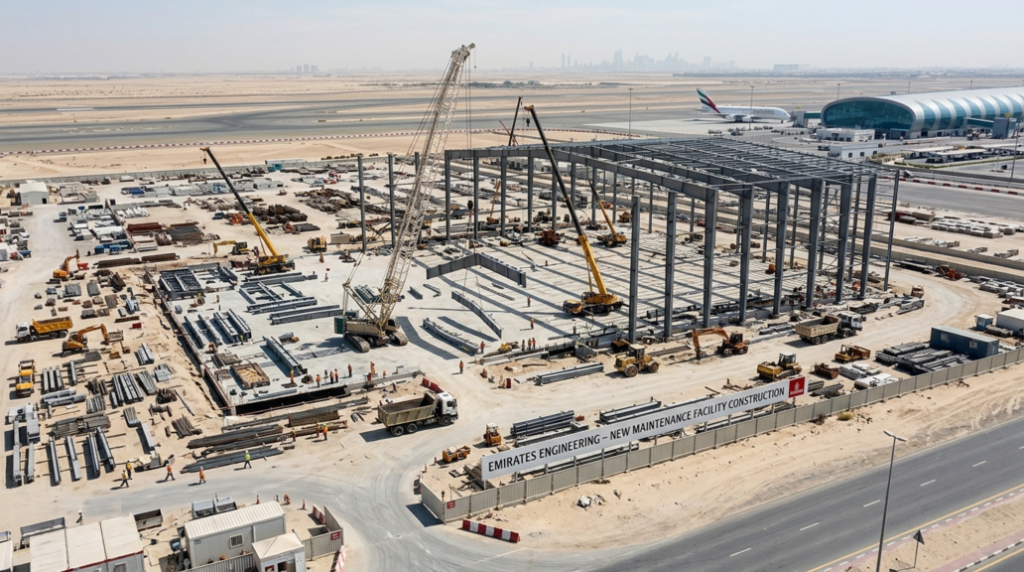
Emirates Airlines has officially begun construction on a $5.1 billion aircraft maintenance facility adjacent to Al Maktoum International Airport in Dubai. This facility is set to feature the world’s largest free-standing hangar, marking a significant investment in aviation infrastructure. The project underscores the ongoing advancements in the global aviation industry and highlights the importance of maintenance operations in supporting airline operations worldwide.
The new maintenance facility will serve as a hub for Emirates Airlines, which has been expanding its fleet and operations in recent years. With an increasing demand for air travel, the airline aims to enhance its maintenance capabilities to ensure the safety and reliability of its aircraft. The establishment of this facility is expected to streamline maintenance processes and improve turnaround times for aircraft servicing.
Located at Dubai World Central, the facility is part of a broader strategy to position Dubai as a key player in the global aviation market. The construction of this state-of-the-art complex reflects the emirate’s ambitions to enhance its aviation infrastructure and improve service offerings. As air travel continues to recover post-pandemic, investments like this may bolster the region’s attractiveness to airlines and passengers alike.
The project is not only significant for Emirates Airlines but also for the local economy. Construction of the facility is likely to create numerous jobs, both during the building phase and once it becomes operational. Skilled workers in construction and aviation maintenance may find new opportunities as the facility begins to take shape. This aligns with the broader trend of infrastructure investments that aim to support job creation in various sectors.
Furthermore, the facility’s advanced maintenance capabilities could have a ripple effect on supply chains. Efficient aircraft maintenance is crucial in minimizing downtime, which can enhance overall operational efficiency for airlines. This could lead to more reliable travel options for passengers and freight services, supporting trade and tourism in the region.
As the global aviation industry continues to evolve, Emirates’ investment in this maintenance facility illustrates the importance of adapting to changing market demands. The facility is expected to be equipped with cutting-edge technology, which could set new standards for maintenance practices in the industry. This emphasis on innovation may encourage other airlines to invest in similar advancements, contributing to the overall growth of the sector.
In conclusion, the construction of Emirates Airlines’ new aircraft maintenance facility in Dubai represents a significant investment in aviation infrastructure. While the immediate focus is on enhancing the airline’s operational capabilities, the project also holds potential benefits for the local economy and the broader aviation industry. As this facility develops, it will be interesting to see how it influences maintenance practices and job opportunities in the region, as well as its impact on the global supply chain dynamics in the aviation sector.