
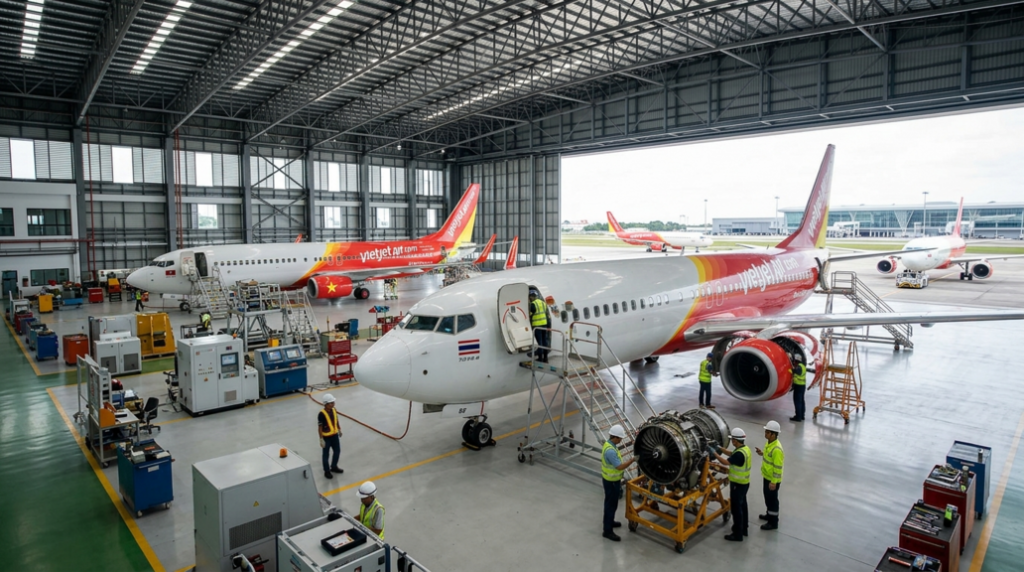
VietJet Air, a Vietnamese low-cost airline, is making significant strides in Thailand’s aviation sector with plans to expand its fleet and establish a new maintenance, repair, and overhaul (MRO) center. The airline aims to grow its Thai fleet from the current 22 aircraft to 50 Boeing 737-8s in the coming years. This expansion reflects VietJet’s commitment to enhancing its operational capabilities and increasing its market presence in the region.
The announcement comes as part of a broader strategy to capitalize on the growing demand for air travel in Southeast Asia. With tourism and business travel rebounding post-pandemic, VietJet’s fleet expansion could position the airline to capture a larger share of the market. The addition of new aircraft is expected to improve service frequency and offer more options for travelers, which may ultimately benefit local economies.
In conjunction with the fleet expansion, VietJet is also establishing a new MRO center at U-Tapao International Airport. This facility will focus on the maintenance of the Boeing 737-8 aircraft and is anticipated to support the airline’s operational needs as it scales up. The MRO center could also serve as a hub for other airlines in the region, underscoring the growing importance of Thailand as a key player in Southeast Asia’s aviation landscape.
The investment in the MRO center is particularly noteworthy as it highlights VietJet’s intention to enhance its technical capabilities locally. By developing this facility, the airline can potentially reduce its reliance on overseas maintenance services, which may lead to cost savings and increased efficiency. This move could also create job opportunities in the local community, particularly for skilled workers in aviation maintenance and engineering.
American aerospace suppliers may find opportunities in this expansion as well. Boeing, the manufacturer of the 737-8 aircraft, could see increased demand for parts and services as VietJet grows its fleet. The relationship between American manufacturers and international airlines like VietJet is vital for sustaining the U.S. aerospace industry’s global competitiveness. As VietJet expands, it may also look to American companies for technological support and innovations, further intertwining U.S. industry with Southeast Asian markets.
As the aviation sector continues to evolve, investments like VietJet’s in Thailand can signal a positive trend for the industry as a whole. Increased competition and capacity in the region may lead to lower fares for consumers and improved service options. Moreover, the establishment of a robust MRO facility could enhance the reliability of air travel in Southeast Asia, benefiting both airlines and passengers alike.
In conclusion, VietJet’s fleet expansion and the development of a new MRO center in Thailand reflect a strategic move to strengthen its position in a competitive market. The implications of these developments extend beyond the airline itself, potentially impacting American aerospace suppliers, local economies, and the overall growth of the regional aviation sector. As these plans come to fruition, they could mark a significant step forward for VietJet and the broader aviation community in Southeast Asia.