Developers in the United States are preparing to add approximately 44.9 billion cubic feet per day (Bcf/d) of new natural gas pipeline capacity by 2026 and 2027, with Texas leading the way. The state is expected to account for over 66% of these additions, highlighting its critical role in the nation’s energy landscape. This significant investment in pipeline infrastructure may enhance the efficiency and reliability of energy supply chains across the country.
The planned expansions are part of a broader trend in the energy sector, reflecting growing demand for natural gas. With Texas at the forefront, approximately 29.7 Bcf/d of the new capacity will originate from the state. Louisiana follows as the second-largest contributor, with about 8.4 Bcf/d. These developments could bolster energy security and support the economic activities of local communities reliant on natural gas.
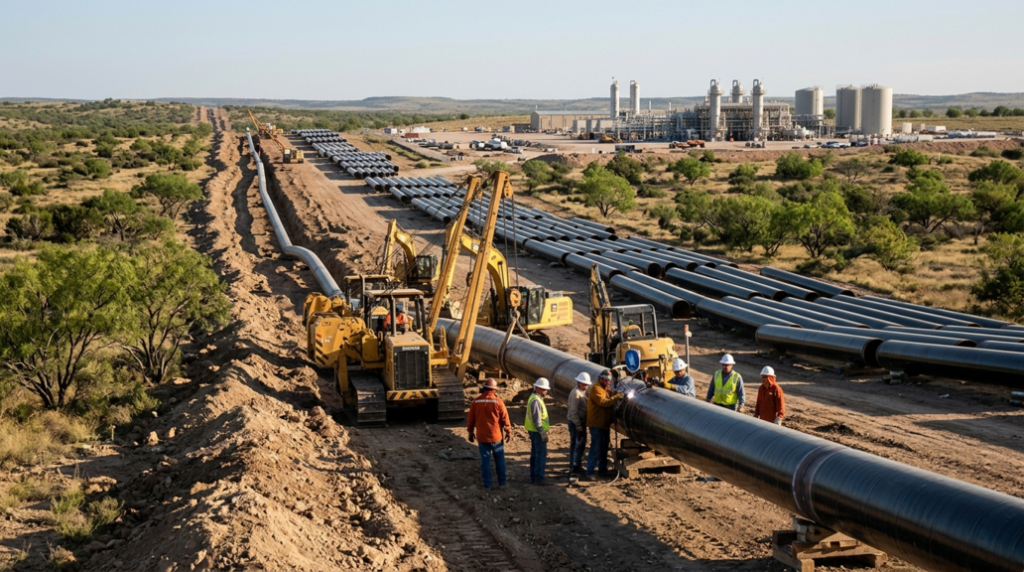
Most of the new pipeline capacity in Texas is already under construction, indicating a strong commitment from developers to meet future energy needs. The ongoing projects not only promise to increase the availability of natural gas but also underscore the importance of robust infrastructure in facilitating energy production and distribution. As supply chains adapt to changing energy demands, these additions could play a crucial role in maintaining stability in the market.
The focus on expanding pipeline capacity comes at a time when natural gas is increasingly viewed as a transitional fuel in the shift toward renewable energy sources. By enhancing the infrastructure that supports natural gas transportation, Texas is positioning itself to meet both current and future energy demands, while also contributing to a more diverse energy portfolio for the nation.
Local economies in Texas and surrounding states may benefit from these developments as they create jobs in construction and related industries. The expansion of pipeline infrastructure can lead to increased investment in energy projects, which could have a ripple effect on local businesses and communities. Moreover, as energy production ramps up, the potential for job creation in skilled trades is likely to rise, supporting a more resilient workforce.
As the energy landscape evolves, the planned pipeline expansions reflect a strategic approach to meet growing demand while ensuring that infrastructure is in place to support sustainable development. The emphasis on natural gas may also provide a buffer against potential energy shortages, particularly during peak demand periods.
In conclusion, Texas’s leadership in planned natural gas pipeline capacity additions underscores its vital role in the American energy sector. The significant investments in infrastructure not only highlight the state’s importance but also point to potential benefits for workers and local communities as the energy industry continues to adapt to changing conditions. As these projects come online, they may enhance the overall resilience of the energy supply chain, contributing to a more secure energy future for the United States.