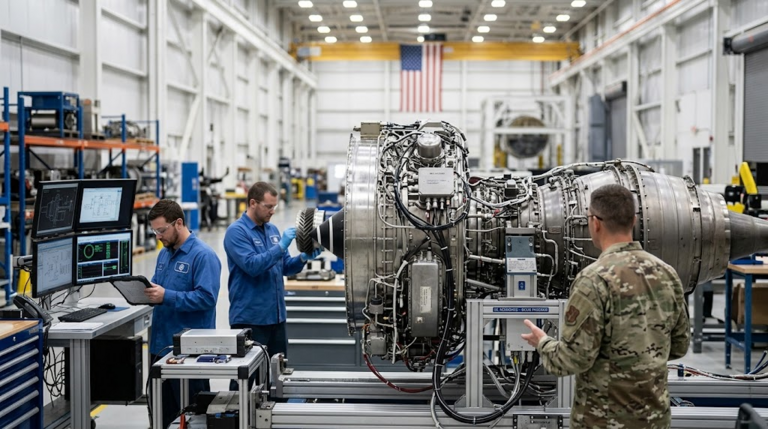
GE Aerospace has been awarded a contract to conduct a preliminary design review for the new GE426 engine, which will be developed for the U.S. Air Force’s autonomous combat aircraft program. This initiative underscores GE’s ongoing commitment to advancing aerospace technology and reflects the growing emphasis on autonomous systems in military operations.
The GE426 engine is part of a broader effort by the U.S. Air Force to enhance its capabilities in aerial combat through the use of unmanned systems. The preliminary design review will allow GE Aerospace to evaluate the engine’s specifications and performance characteristics, ensuring it meets the rigorous demands of modern military applications. This contract is a significant step in the development of engines that can support autonomous platforms, which are increasingly seen as vital to future defense strategies.
GE Aerospace’s involvement in this project highlights the company’s role in the evolving landscape of the aerospace industry, particularly in the context of defense. As military operations become more reliant on technology, advancements in engine design and performance will likely play a crucial role in maintaining operational effectiveness. The development of the GE426 engine could lead to innovations that not only benefit military applications but also have potential spillover effects into commercial aviation.
The focus on small, efficient engines designed for autonomous vehicles signifies a shift towards more agile and adaptable military assets. The U.S. Air Force’s investment in such technologies points to a recognition of the increasing importance of unmanned systems in achieving strategic objectives. By collaborating with GE Aerospace, the Air Force is likely to enhance its operational capabilities while also supporting domestic manufacturing and technological innovation.
This contract could have implications for American workers, particularly those involved in aerospace engineering and manufacturing. As companies like GE invest in cutting-edge technologies, there may be an increased demand for skilled labor to support these advancements. The development and production of the GE426 engine could lead to job creation in various sectors, including engineering, manufacturing, and research.
Furthermore, the emphasis on developing engines for autonomous systems aligns with broader trends in the aerospace sector, where innovation is key to maintaining competitiveness. The collaboration between the U.S. Air Force and GE Aerospace may encourage further investments in research and development within the industry, potentially leading to new opportunities for American businesses and workers.
In conclusion, GE Aerospace’s contract to develop the GE426 engine for the U.S. Air Force marks an important step in the evolution of military aviation technology. As the aerospace industry adapts to new challenges and opportunities, the focus on autonomous systems and advanced engine design could pave the way for significant advancements in both defense capabilities and industrial growth in the United States.