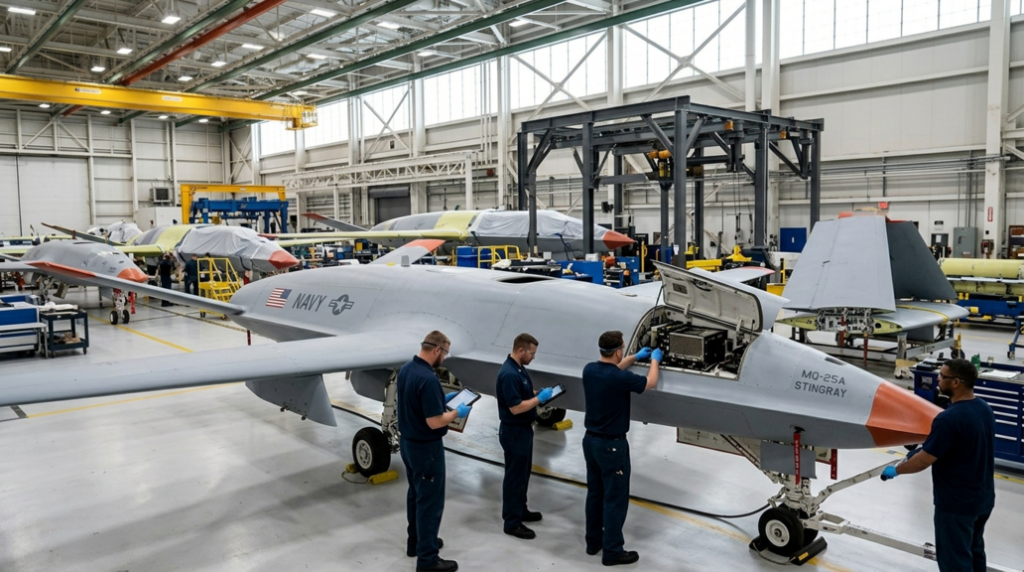
The U.S. Navy’s MQ-25A Stingray unmanned aerial vehicle has received approval to enter the low-rate initial production phase, marking a significant milestone in the program’s development. This decision, known as Milestone C authorization, allows the Navy to begin producing the aircraft, which is designed to enhance the operational capabilities of aircraft carriers by providing aerial refueling support. The projected total cost of the MQ-25A program is estimated at $15.9 billion, with the initial production contracts expected to be awarded this summer.
The MQ-25A Stingray, developed by Boeing, represents a strategic advancement in naval aviation. By utilizing unmanned technology, the aircraft aims to increase the efficiency and effectiveness of carrier-based operations. The Navy plans to award an initial contract for three aircraft, with additional options for future production lots that could see the procurement of more units in the coming years.
This program is indicative of the ongoing evolution of military aviation, where unmanned systems are becoming increasingly integral to operational strategies. The Stingray is designed to extend the range and endurance of carrier strike groups, allowing for greater operational flexibility and reduced risk to manned aircraft. As the Navy integrates this new technology, it reflects a broader trend in defense towards automation and advanced aerial capabilities.
From an industrial perspective, the approval for low-rate initial production is expected to benefit American manufacturing and create job opportunities in various sectors. The contracts associated with the MQ-25A program could lead to increased demand for skilled labor in aerospace manufacturing, engineering, and support services. This aligns with efforts to bolster domestic defense production and maintain a competitive edge in military capabilities.
The rollout of the MQ-25A also underscores the importance of supply chain resilience in U.S. defense procurement. As the program progresses, it will necessitate a robust supply chain involving numerous suppliers and manufacturers across the country. This could strengthen local economies, particularly in regions with established aerospace industries, as new contracts and production lines come online.
In the broader context of U.S. defense strategy, the MQ-25A Stingray is part of a concerted effort to modernize the Navy’s fleet and enhance its capabilities in a rapidly changing global security environment. The integration of unmanned systems like the Stingray is seen as crucial for maintaining the United States’ military readiness and ensuring that naval forces can operate effectively in various scenarios.
As the Navy prepares to enter the production phase of the MQ-25A, stakeholders will be watching closely to see how this program unfolds. The successful deployment of the Stingray could not only improve the operational capabilities of the Navy but also provide a model for future advancements in unmanned technologies across various branches of the military. The upcoming contracts and production activities will likely have a lasting impact on American industry and defense capabilities in the years to come.