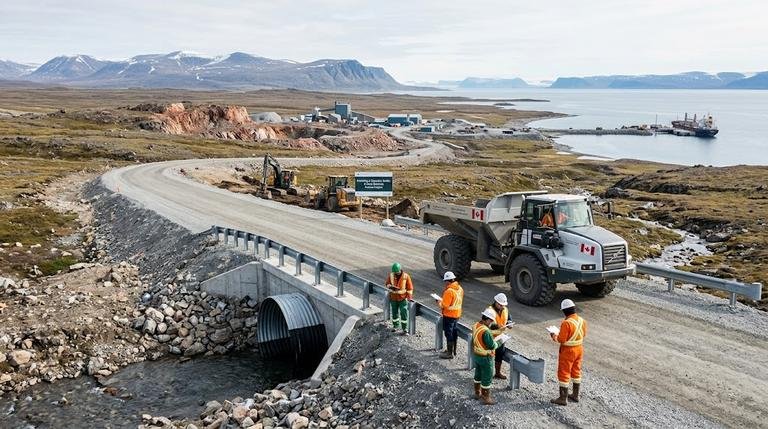
The Government of Canada has announced a significant investment of over $55 million aimed at enhancing infrastructure in the Arctic. This funding is intended to bolster access to critical minerals, which are essential for various industries, including technology and renewable energy. The initiative reflects Canada’s commitment to strengthening its mineral supply chains and reinforcing its sovereignty in the Arctic region.
The investment will support two key infrastructure projects designed to improve transportation and logistics in the Arctic. By enhancing these capabilities, Canada aims to unlock untapped mineral reserves, which could lead to increased production and export opportunities. This move is seen as a strategic effort to diversify export markets and reduce reliance on foreign sources for critical minerals.
Critical minerals, such as lithium, cobalt, and rare earth elements, are vital for the production of batteries, electric vehicles, and other high-tech applications. As global demand for these materials continues to rise, Canada’s efforts to develop its mineral resources could play an important role in meeting the needs of both domestic and international markets.
For American industries, this investment could have several implications. Strengthened supply chains in Canada may lead to more reliable access to critical minerals for U.S. manufacturers. This is particularly relevant as the United States seeks to bolster its own production capabilities and reduce dependence on imports from other regions. Enhanced cooperation in the North American supply chain could support industries ranging from automotive to renewable energy.
Additionally, the focus on Arctic infrastructure aligns with broader efforts to address climate change and transition to a greener economy. By investing in local resources and infrastructure, Canada is positioning itself as a key player in the global transition to sustainable energy solutions. This could foster innovation and create new economic opportunities in both Canada and the United States.
The Canadian government has underscored that this investment also aims to benefit northern and Indigenous communities. By improving access to resources and infrastructure, local populations may experience enhanced economic prospects and job opportunities. This community-focused aspect highlights the potential for responsible resource development that prioritizes local needs.
As Canada moves forward with these infrastructure projects, it could mark another step in the evolution of the Arctic as a significant area for critical mineral production. The success of these initiatives may not only strengthen Canada’s economy but could also have a ripple effect on American industries that rely on these essential materials.
In conclusion, Canada’s investment in Arctic infrastructure represents a strategic approach to enhancing mineral access and supporting local communities. As the global demand for critical minerals continues to grow, the implications for American industries and supply chains could be substantial, affirming the importance of cross-border collaboration in resource development.