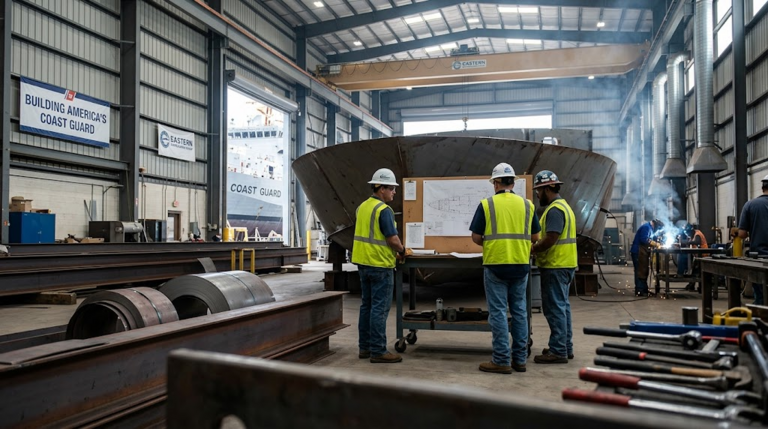
The U.S. Coast Guard and Eastern Shipbuilding Group are currently engaged in negotiations to resolve a contract dispute concerning the Offshore Patrol Cutter (OPC) program. This dialogue comes in the wake of significant operational setbacks, including the suspension of work on the first two vessels in the class, Argus (WMSM-915) and Chase (WMSM-916), which halted in November of last year. The outcome of these negotiations could have notable implications for the American shipbuilding industry and the skilled workforce involved in producing these critical vessels.
The Offshore Patrol Cutter program is a key initiative aimed at enhancing the Coast Guard’s capabilities in maritime security and law enforcement. Originally, Eastern Shipbuilding was contracted to deliver a total of 25 OPCs, but delays and financial strains have complicated the project. The Coast Guard confirmed this week that discussions are ongoing regarding the closeout of the contract with Eastern, which raises questions about the future of the program and the potential impact on American shipbuilding.
Eastern Shipbuilding, based in Florida, has faced challenges that led to the work stoppage. Reports indicate that financial difficulties and issues related to the program’s conditions have hampered the yard’s ability to meet its contractual obligations. The current negotiations aim to settle the existing contract and determine the next steps for the OPC program, which is essential for the Coast Guard’s operational readiness.
Shipbuilding is a vital sector of the American economy, contributing to local communities and providing skilled jobs. The resolution of this contract dispute could influence not just the immediate workforce at Eastern Shipbuilding but also the broader shipbuilding industry across the country. A successful negotiation may allow the program to proceed, supporting jobs and maintaining the supply chain for materials and components necessary for these vessels.
The Coast Guard has emphasized the importance of the OPC program, which is designed to replace aging cutters and improve maritime capabilities. The program’s success is crucial not only for national security but also for sustaining the maritime industrial base in the United States. The ongoing discussions highlight the complexities involved in government contracts and the need for clear communication between contractors and federal agencies.
As negotiations continue, stakeholders from various sectors are watching closely. The resolution process could set a precedent for future contracts within the defense and maritime industries, particularly as the U.S. seeks to modernize its fleet and enhance its maritime presence. The outcome may also influence how similar disputes are handled in the future, potentially streamlining processes and improving relations between contractors and government entities.
In conclusion, the negotiations between the Coast Guard and Eastern Shipbuilding represent a critical juncture for the Offshore Patrol Cutter program. While the immediate future of the vessels remains uncertain, the discussions could pave the way for renewed production and stability in the shipbuilding sector. As the situation develops, the focus will remain on finding a solution that not only addresses the current issues but also supports the long-term goals of the Coast Guard and the American shipbuilding industry.