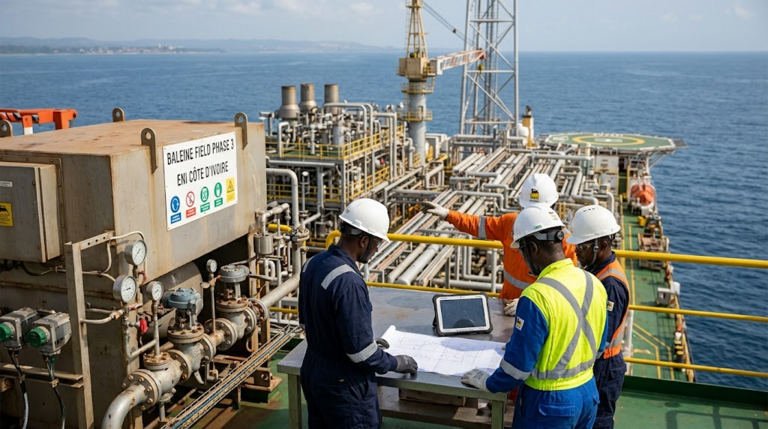
Eni, an Italian multinational oil and gas company, has received approval for the Baleine Phase 3 offshore development project in Côte d’Ivoire. This initiative is expected to significantly increase oil production in the region, with projections estimating a rise to 150,000 barrels of oil per day (bopd). Additionally, the project aims to enhance local natural gas supply through the installation of a new Floating Production Storage and Offloading (FPSO) unit.
The Baleine project, which has been developed in multiple phases, is a key component of Côte d’Ivoire’s strategy to bolster its energy sector. By expanding production capabilities, the project underscores the country’s growing role as a significant player in West Africa’s oil and gas landscape. The FPSO installation will not only facilitate oil extraction but is also expected to improve the infrastructure for natural gas distribution, which could benefit local communities and industries.
Eni, alongside its partners, is moving forward with this development amid a broader context of increasing global energy demands. As countries seek to secure their energy supplies, projects like Baleine Phase 3 highlight the importance of offshore oil and gas developments in meeting these needs. The project is designed to provide a more stable energy supply, which is essential for both local consumption and potential export opportunities.
The implementation of the FPSO technology is particularly noteworthy. FPSOs are versatile and can operate in deep water, allowing for efficient extraction and storage of hydrocarbons. This technology can lead to reduced costs and increased operational efficiency, which are critical factors in today’s competitive energy market. The Baleine Phase 3 project could serve as a model for future offshore developments in the region, potentially attracting further investment.
As Côte d’Ivoire continues to enhance its oil production capabilities, the implications for local workers and communities could be significant. Increased production may lead to job creation in various sectors, from construction and engineering to operations and maintenance. Additionally, the enhanced energy supply could stimulate local businesses and attract further investments in the region.
While the Baleine project is primarily focused on oil and gas, its successful execution could also have positive repercussions for Côte d’Ivoire’s overall economic development. The increased energy output may contribute to energy security, a crucial aspect for any nation looking to develop its industrial base and improve living standards for its citizens.
In conclusion, the approval of the Baleine Phase 3 offshore development marks a significant step for Eni and Côte d’Ivoire, positioning the country as a more prominent player in the global oil and gas industry. As the project moves forward, it will be important to monitor its impacts on local communities, energy supply chains, and the broader economic landscape in West Africa.