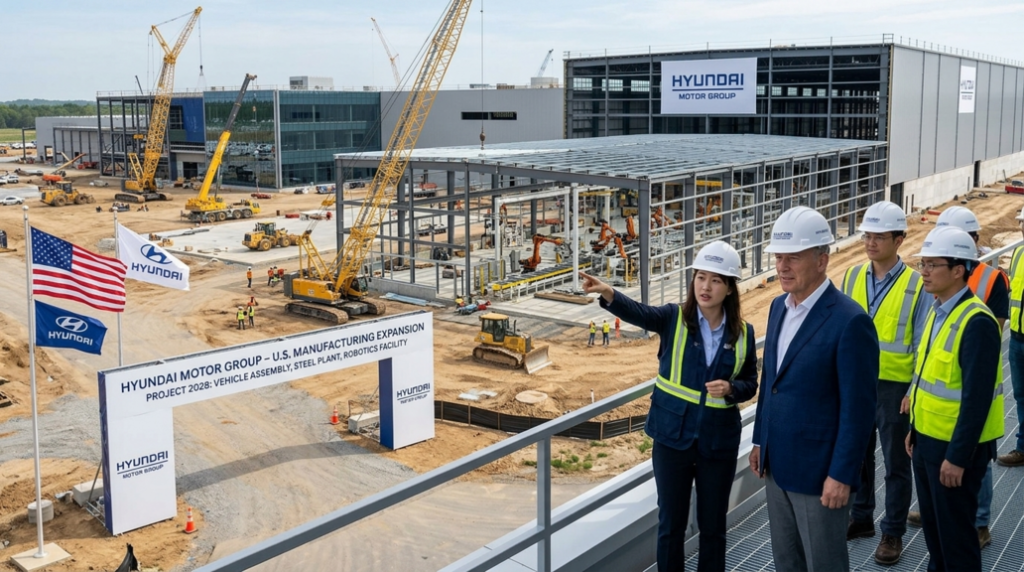
Hyundai Motor Group has significantly raised its U.S. investment commitment to $26 billion for the period 2025 through 2028, up from the $21 billion initially announced earlier in 2025. This $5 billion increase reflects Hyundai’s strategic push to expand vehicle production capabilities, establish domestic supply chains, and reduce exposure to import tariffs in the United States.
The investment plan encompasses several key initiatives. Hyundai’s Metaplant America in Georgia, an electric vehicle manufacturing facility, began production in late 2024 with an initial capacity of 300,000 vehicles annually. Plans are already in place to scale production to 500,000 vehicles per year in response to growing demand. Beyond vehicle assembly, Hyundai is also launching a Robotics Innovation Hub aimed at producing 30,000 robotic units annually, supporting automation and manufacturing innovation.
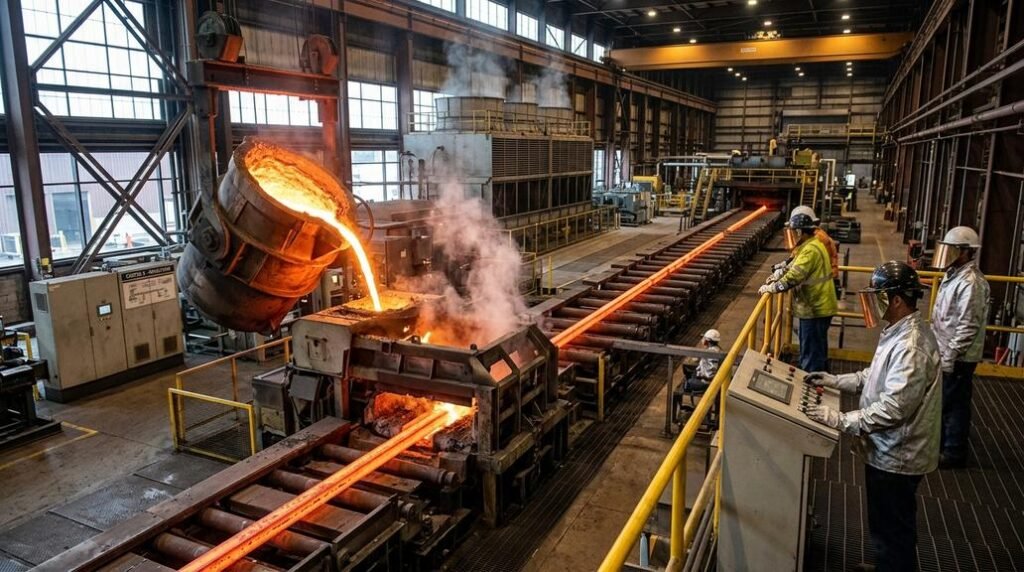
Further solidifying its domestic supply chain, Hyundai announced the development of a steel plant in Louisiana. This facility is projected to produce 2.7 million metric tons of steel annually, supplying critical materials for U.S. vehicle assembly operations starting in 2029.
Hyundai’s investment is part of a broader trend among global automakers ramping up their U.S. manufacturing and supply chain presence. By localizing production and materials sourcing, these companies aim to strengthen their industrial competitiveness and mitigate the impacts of tariffs and supply chain disruptions.
The expanded U.S. footprint is expected to create about 25,000 direct jobs by 2028, providing employment opportunities in manufacturing, robotics, and materials production. For American workers and communities, Hyundai’s investment represents a multi-faceted industrial boost, spanning cutting-edge electric vehicle production and upstream raw material manufacturing.
Overall, Hyundai Motor Group’s $26 billion commitment underscores the ongoing transformation within the global automotive industry as it adapts to evolving market demands, technological innovation, and changing trade dynamics. The company’s efforts to embed deeper into the U.S. manufacturing ecosystem highlight the continuing significance of domestic production capacity in the landscape of 21st-century automotive manufacturing.