
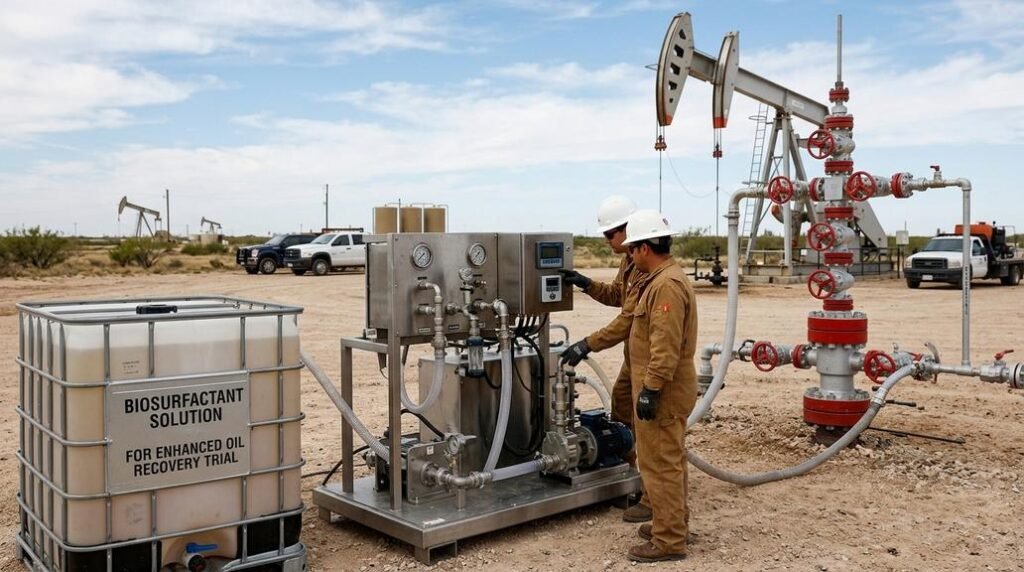
A recent field trial in the Permian Basin has shown that the use of biosurfactants can significantly enhance oil and gas production. Conducted by Locus Bio-Energy in collaboration with major industry players, the trial demonstrated that these natural compounds can increase cumulative production, sparking renewed interest in chemical recovery methods within the sector.
Biosurfactants are surface-active agents produced by living organisms, which can improve the efficiency of oil extraction by reducing surface tension. The results from the Permian Basin trial point to the potential for these compounds to not only increase yield but also to do so in a more environmentally friendly manner compared to traditional chemical surfactants.
The trial involved multiple wells and aimed to assess the effectiveness of biosurfactants in boosting production rates. Early results indicated a notable improvement in both the volume of oil and gas extracted and the overall efficiency of the extraction process. This could mark a significant step forward for operators looking to maximize output in a competitive market.
As the demand for energy continues to grow, innovations like biosurfactants could play a critical role in enhancing production capabilities. This aligns with broader industry trends focusing on sustainability and efficiency. Many companies are under pressure to reduce their environmental footprint while still meeting energy needs, making this development particularly timely.
The implications of this trial extend beyond just production figures. If widely adopted, biosurfactants could help stabilize supply chains by ensuring more reliable extraction rates. This could be especially beneficial in regions like the Permian Basin, which is a key area for oil and gas production in the United States.
Moreover, increased production efficiency can lead to economic benefits for local communities. Enhanced output may result in more jobs and investment in infrastructure as companies expand operations to accommodate new technologies and methods. This could stimulate local economies and provide opportunities for skilled workers in the energy sector.
While the results are promising, further testing and analysis will be necessary to fully understand the long-term effects and scalability of biosurfactants in various extraction environments. However, the initial findings underscore a growing interest in innovative solutions that could reshape the industry landscape.
In conclusion, the successful trial of biosurfactants in the Permian Basin highlights a potential shift towards more efficient and environmentally friendly oil and gas production methods. As the industry continues to evolve, these advancements could support both energy security and economic growth in the regions most affected by energy production activities.