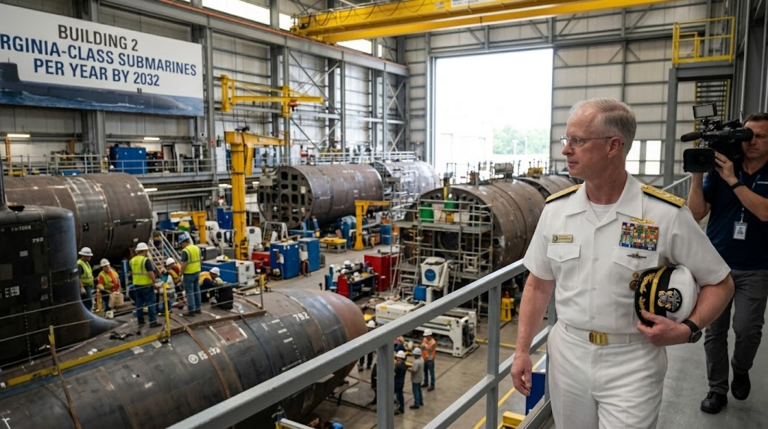
The Chief of Naval Operations, Adm. Daryl Caudle, recently announced that American shipbuilders are on track to achieve a production rate of two Virginia-class attack submarines per year by 2032. This development reflects ongoing investments in the submarine industrial base, which is vital for national defense and maritime security. The plan underscores the commitment to enhancing the capabilities of the U.S. Navy while also boosting the shipbuilding workforce and associated industries.
General Dynamics Electric Boat and HII’s Newport News Shipbuilding are the primary contractors responsible for this production goal. According to Adm. Caudle, the advancements made in construction techniques and workforce training have positioned these shipbuilders to meet the increased demand for submarines effectively. The two-a-year delivery rate is considered crucial to maintaining the Navy’s operational readiness and strategic capabilities in an evolving global landscape.
The Virginia-class submarines are known for their advanced technology and versatility, serving various roles from intelligence gathering to strike missions. As these submarines are integral to the Navy’s undersea warfare strategy, increasing their production rate could enhance the United States’ deterrence capabilities. The anticipated ramp-up in production aligns with broader efforts to modernize the Navy’s fleet and address potential threats in international waters.
The announcement comes at a time when the U.S. is focusing on strengthening its industrial base, particularly in defense manufacturing. The push for increased submarine production highlights the importance of skilled labor in shipbuilding, as these roles are expected to expand alongside production. The shipbuilding industry could see job growth as the demand for skilled workers rises to meet the new production targets.
Moreover, the investment in shipbuilding not only supports military readiness but also has positive ripple effects on local economies. Communities surrounding shipyards often benefit from increased employment opportunities and economic activity. The commitment to producing two submarines annually could lead to enhanced job security for workers in these regions, fostering a more robust industrial environment.
The Virginia-class program is part of a larger strategy that includes modernization efforts across various naval platforms. As the Navy evaluates its long-term needs, the successful implementation of this production rate could serve as a model for future shipbuilding initiatives. It may also encourage further investments in technology and infrastructure to support the evolving demands of maritime defense.
In conclusion, the goal of achieving a two-a-year production rate for Virginia-class submarines by 2032 marks a significant milestone for the U.S. Navy and its shipbuilding partners. This initiative reflects a broader commitment to strengthening national defense capabilities while also supporting local economies and workforce development in the shipbuilding sector. As these plans unfold, they will likely play a crucial role in shaping the future of American naval power and industrial capacity.