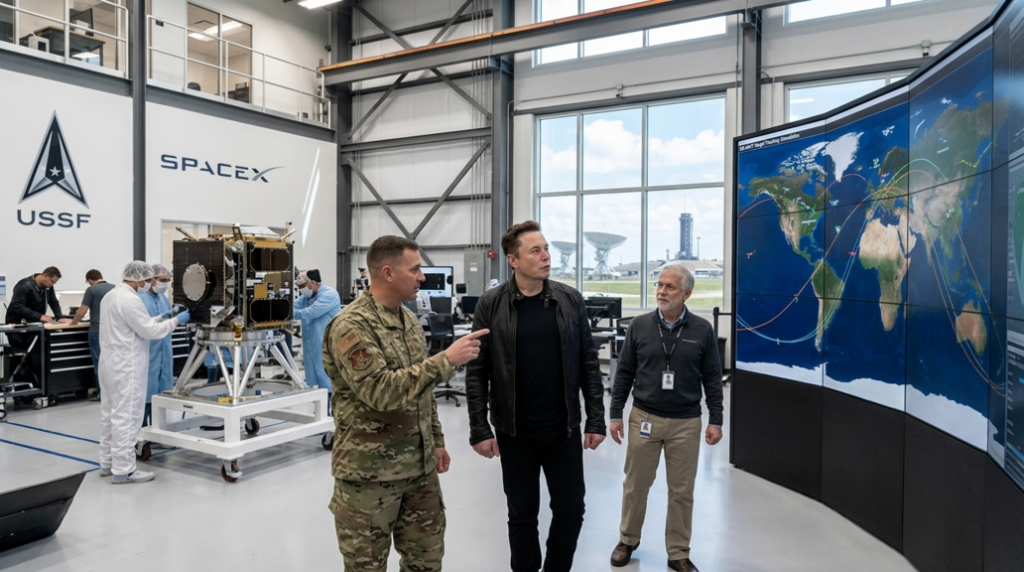
SpaceX has secured a significant contract with the U.S. Space Force, valued at $4.16 billion, to develop capabilities for detecting airborne moving targets. This award is part of the Space-Based Airborne Moving Target Indicator (SB-AMTI) program, which aims to enhance the military’s ability to track and identify aerial threats using satellite technology. The contract marks an important milestone for SpaceX and underscores the company’s growing role in national defense initiatives.
The SB-AMTI program is designed to create a constellation of satellites that will provide real-time data on airborne targets. This capability could eventually replace the aging fleet of Airborne Warning and Control System (AWACS) aircraft, which have been a cornerstone of aerial surveillance for decades. The transition to satellite-based systems reflects a broader trend in defense strategy, emphasizing the need for more advanced and flexible monitoring solutions.
In addition to the immediate technological advancements, the contract presents potential opportunities for American industry and workers. The Space Force has indicated that it plans to issue multiple awards in the coming year, which could open the door for further contracts and collaborations within the defense sector. This environment may foster job creation and innovation as companies compete to develop new technologies for military applications.
SpaceX’s selection for this contract is notable given the company’s history of successful launches and its reputation as a leader in aerospace technology. The company has previously secured contracts for various NASA missions and commercial satellite deployments, showcasing its capabilities in both civilian and military applications. This new role in defense further solidifies SpaceX’s position as a key player in the evolving landscape of national security.
The development of the SB-AMTI system is expected to accelerate the military’s operational readiness. By leveraging satellite technology, the Space Force aims to enhance its situational awareness and responsiveness to airborne threats. This advancement could lead to improved defense strategies and a more robust national security framework.
Moreover, the emphasis on satellite-based surveillance aligns with broader trends in defense spending and investment in technology. As the military seeks to modernize its capabilities, contracts like the one awarded to SpaceX could spur further innovation and investment in related sectors. This shift not only benefits defense contractors but may also have positive spillover effects on the broader economy, particularly in high-tech industries.
As the Space Force continues to develop its satellite capabilities, the implications for American workers and local communities could be substantial. Increased demand for skilled labor in engineering, manufacturing, and technology sectors may arise as companies ramp up production to meet new defense needs. This could provide a boost to local economies, especially in regions with a strong industrial base.
In conclusion, SpaceX’s $4.16 billion contract with the Space Force represents a significant step in the integration of advanced technology into military operations. While the immediate focus is on developing airborne target detection capabilities, the broader implications for American industry, defense strategy, and workforce development could be profound. As the Space Force moves forward with this initiative, the potential for job creation and technological innovation remains a key consideration for stakeholders across the defense sector.