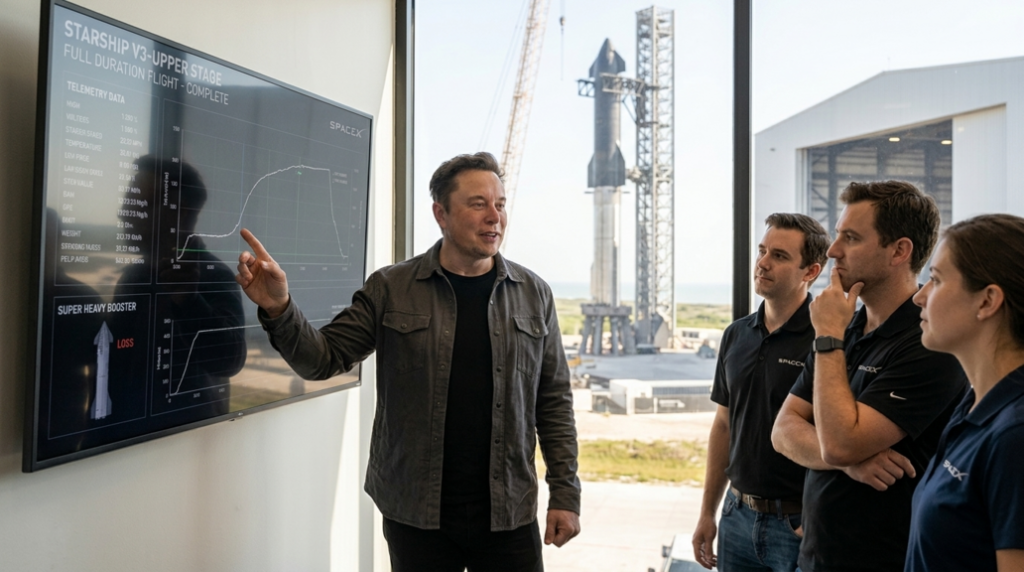
SpaceX achieved a notable milestone with the successful full suborbital flight of its latest Starship-Super Heavy launch vehicle, known as Starship V3. This flight, which took place recently, marked a significant step forward for the aerospace company, despite the loss of the first-stage booster during the mission. The successful completion of this test not only highlights the ongoing advancements in aerospace technology but also reflects SpaceX’s commitment to innovation in an increasingly competitive sector.
The Starship V3 flight was designed to test various systems and capabilities of the vehicle. While the booster did not perform as expected, the upper stage successfully reached space and executed a series of maneuvers, including deploying 22 payloads. This aspect of the flight underscores the resilience of SpaceX’s engineering, as the upper stage was able to complete its objectives despite the initial setback.
SpaceX’s efforts with the Starship program are part of a broader trend in American aerospace, where private companies are increasingly taking on roles traditionally held by government agencies. The advancements seen in this flight could enhance the United States’ position in the global aerospace market, potentially leading to more robust supply chains and increased industrial capacity in related sectors.
The implications of this successful flight extend beyond just SpaceX. As the aerospace industry continues to evolve, there could be opportunities for American workers in various fields, including engineering, manufacturing, and technology. The demand for skilled labor in these areas may grow as companies invest in new technologies and expand their operations.
Moreover, this successful flight could serve as a catalyst for further investments in aerospace infrastructure. As companies like SpaceX push the boundaries of what is possible, there may be increased interest from investors and stakeholders in supporting the development of new technologies and facilities. This could lead to enhanced energy security and production capabilities within the industry.
The Starship program is also closely tied to future missions, including potential crewed flights to the Moon and Mars. The successful test of Starship V3 could pave the way for more ambitious projects, which would not only advance scientific knowledge but also create new jobs and opportunities within the aerospace sector.
In conclusion, while the loss of the booster during the Starship V3 flight presents challenges, the overall success of the mission highlights significant advancements in aerospace technology. The achievements of SpaceX reflect a growing trend towards innovation and resilience in American industry, with potential benefits for workers and the economy at large. As the aerospace sector continues to develop, the focus will remain on how these advancements can support broader goals in exploration, production, and infrastructure development.