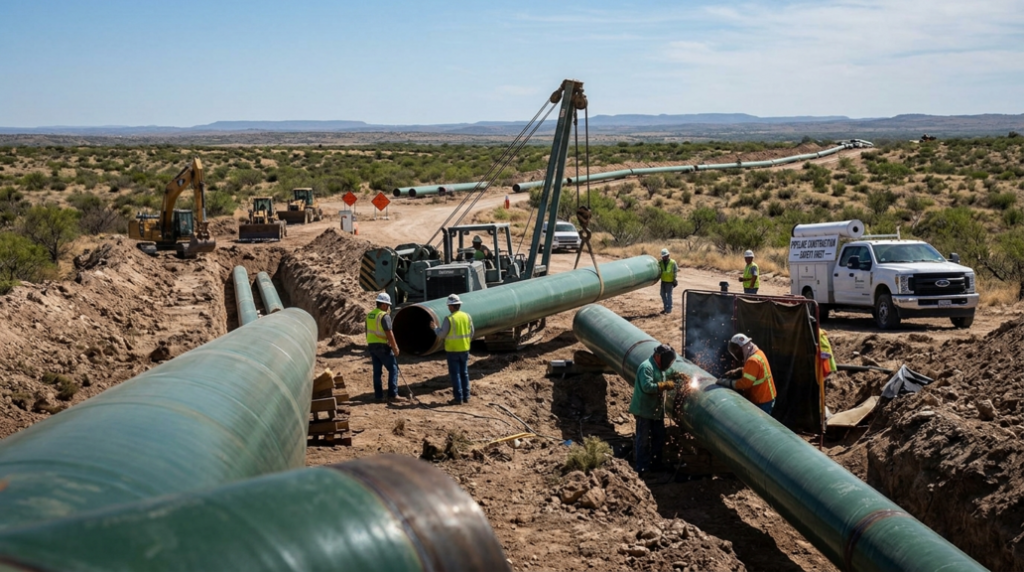
Texas is set to play a pivotal role in the expansion of natural gas pipeline capacity in the United States, with plans to add nearly 45 billion cubic feet per day (Bcf/d) by 2026 and 2027. According to the latest data from the Natural Gas Pipeline Projects Tracker, about 70% of this new capacity is already under construction, underscoring the state’s significant position in the energy infrastructure landscape.
More than two-thirds of the planned capacity additions, approximately 29.7 Bcf/d, will originate in Texas. This development reflects the state’s ongoing commitment to enhancing its energy infrastructure, which is crucial for meeting both domestic and international energy demands. Louisiana follows as the second-largest contributor, accounting for 19% of the total capacity additions, or about 8.4 Bcf/d.
The surge in pipeline capacity is expected to facilitate greater transportation of natural gas from production areas to markets, potentially increasing energy security and supporting economic growth in local communities. Enhanced pipeline infrastructure can lead to more reliable energy supplies, which is particularly important as the nation continues to transition towards cleaner energy sources while still relying on natural gas as a key component of its energy mix.
The construction of these pipelines is anticipated to create jobs in construction and related sectors, providing opportunities for skilled workers in Texas and beyond. As the energy industry evolves, investments in infrastructure like these pipelines could also lead to long-term employment stability in regions heavily reliant on energy production.
Industry analysts note that the planned expansions are essential for accommodating the growing demand for natural gas, both for domestic use and for export. With natural gas increasingly seen as a bridge fuel in the transition to renewable energy, the enhancements in pipeline capacity could play a vital role in maintaining a balanced energy portfolio.
Moreover, the new projects could help alleviate bottlenecks in existing infrastructure, which have sometimes hindered the efficient flow of gas from production sites to end users. By addressing these challenges, Texas is positioning itself as a crucial hub in the national energy landscape, which may yield benefits for consumers through improved pricing and availability.
As these pipeline projects move forward, stakeholders will be closely monitoring their impact on both the local economies and the broader energy market. The developments in Texas not only reflect the state’s leadership in energy production but also highlight the intricate connections between infrastructure investment and workforce opportunities in the evolving energy sector.
In conclusion, Texas’s prominent role in the planned natural gas pipeline capacity additions for 2026 and 2027 marks a significant step in enhancing the country’s energy infrastructure. This expansion is poised to support economic growth, job creation, and greater energy reliability, reinforcing the state’s status as a key player in the energy industry.